Mole Removal Consultation: What to Ask Your Doctor Before Treatment
If you are considering Mole removal in Dubai, a consultation is the best time to understand why the mole should be removed, which technique may be suitable, and what results you can realistically expect. Asking the right questions also helps distinguish a cosmetic concern from a mole that may need further medical assessment. A qualified dermatologist can examine the lesion and recommend the safest next step based on its appearance, location, and your individual skin characteristics.
Why Is the Mole Being Removed?
One of the first questions to ask is, “Why do you recommend removing this mole?” Not every mole needs to be removed. Some are removed because they are bothersome, frequently irritated, or cosmetically unwanted, while others require removal because their appearance raises medical concerns.
If a mole is new, changing, itching, bleeding, or noticeably different from your other moles, it deserves careful evaluation. Dermatologists commonly use the ABCDE warning signs—asymmetry, border irregularity, color variation, diameter, and evolution—when assessing lesions that could require further investigation.
You can ask your doctor:
- Does this mole look benign?
- Do you see any suspicious features?
- Does it need to be removed or simply monitored?
- Should I have the rest of my skin checked as well?
- Could this mole require a biopsy?
These questions help establish whether your goal is primarily cosmetic mole removal or whether diagnosis and medical safety should take priority.
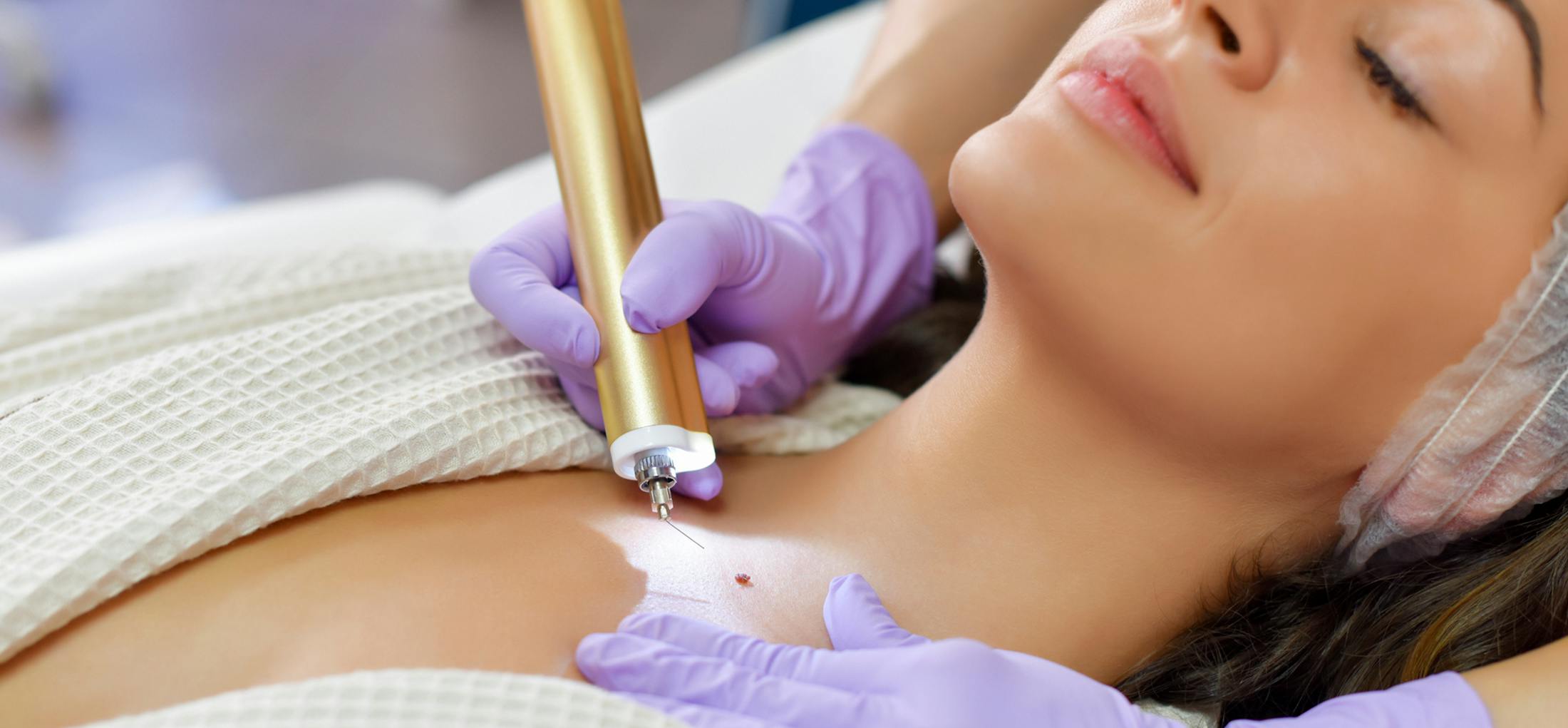
Which Mole Removal Method Is Best for Me?
Another important question is which removal technique your doctor recommends and why. The appropriate method can depend on the mole's size, depth, location, appearance, and whether the doctor believes tissue needs to be examined under a microscope.
For a mole that appears suspicious, removal may be performed as a biopsy so the tissue can be sent to a laboratory for examination. The American Cancer Society notes that the biopsy method is selected according to factors such as the affected area's size and location.
During your consultation, ask:
- Which removal method do you recommend?
- Why is this technique appropriate for my mole?
- Will the entire mole be removed?
- Will the removed tissue be sent for pathology?
- Is a biopsy necessary before or during removal?
- Are there alternative approaches?
Understanding the reasoning behind the recommended technique is more useful than simply choosing the quickest-looking option. A dermatologist should explain the benefits, limitations, risks, and alternatives before treatment.
Will the Mole Be Tested for Skin Cancer?
This is particularly important if the mole has changed or has unusual characteristics. You should not assume that every mole removed for cosmetic reasons requires the same type of assessment. Your doctor can explain whether pathology testing is appropriate in your specific case.
When melanoma is suspected, the removed tissue can be examined under a microscope to establish a diagnosis. An excision biopsy may involve removing the mole along with a small amount of surrounding skin and sending it to a laboratory.
Ask your doctor:
- Will my mole be examined by a pathologist?
- When should I expect the pathology results?
- What happens if the result is abnormal?
- Would additional treatment be necessary if abnormal cells are found?
- Who will explain the results to me?
Knowing what happens after the procedure can make the consultation much less stressful. It also ensures that you understand whether the appointment is purely cosmetic or part of a medical investigation.
What Scarring and Skin Changes Should I Expect?
A major concern for many people considering mole removal is the appearance of the skin afterward. Even a relatively small procedure can leave some degree of scarring, depending on the removal technique, the mole's size and depth, the treatment area, and individual healing.
The American Cancer Society notes that skin biopsies can leave at least a small scar and that different biopsy techniques can produce different types of scars.
Ask specifically:
- Where will the scar be located?
- How noticeable is the scar likely to be?
- Could the scar become raised, darker, or lighter?
- How should I care for the area after removal?
- How long might the scar take to mature?
- What can I do to protect the healing skin from sun exposure?
If the mole is on a highly visible area such as the face, your doctor may discuss how the chosen technique can affect the final appearance. However, the priority should always be appropriate medical treatment rather than choosing a technique based solely on minimizing a visible mark.
What Are the Risks, Recovery Time, and Aftercare?
Every medical procedure has potential risks, so your consultation should include a clear explanation of what recovery involves. The American Academy of Dermatology recommends asking about risks, expected results, preparation, aftercare, and recovery before undergoing a cosmetic procedure.
Useful questions include:
- How long will the procedure take?
- Will local anesthesia be used?
- What will I feel during the procedure?
- How long should I expect redness or tenderness?
- When can I return to work or normal activities?
- How should I clean and protect the treatment area?
- What symptoms should prompt me to contact the clinic?
- When should I return for a follow-up?
If stitches are required, also ask when they will need to be removed and whether the location of the mole affects healing time.
Following aftercare instructions carefully can help support normal healing. Your dermatologist can provide specific guidance based on the technique used and the area treated.
How Can I Prepare for Mole Removal?
Preparation is another useful part of the consultation. Tell your doctor about relevant medications, allergies, previous reactions to local anesthetics, and any medical conditions or skin problems that could affect the procedure.
You should also tell the dermatologist if you have noticed recent changes in the mole. Details such as when you first noticed it, whether it has grown, and whether it has started itching or bleeding can help the doctor assess it.
Before leaving the consultation, make sure you understand:
- Whether you need to stop or adjust anything before treatment
- Whether you need to avoid particular skincare products
- What you should bring or arrange for the appointment
- Whether you need a follow-up examination
- How and when you will receive any pathology results
Do not hesitate to ask for clarification if anything is unclear. The AAD emphasizes that having enough information about the procedure, risks, benefits, alternatives, and recovery helps patients make informed decisions.
What Should You Know Before Choosing a Dermatologist?
The person performing the procedure matters, particularly when a mole needs medical assessment rather than simple cosmetic treatment. Ask about the doctor's qualifications, experience with mole evaluation and removal, and experience treating people with your skin type and tone.
The American Academy of Dermatology recommends asking about a doctor's credentials and experience with the specific procedure, as well as their experience treating patients with different skin tones and types.
You can ask:
- Are you a board-certified dermatologist?
- How often do you perform this type of mole removal?
- How do you evaluate suspicious moles?
- What happens if the pathology report shows an abnormal result?
- Will I receive clear aftercare and follow-up instructions?
A good consultation should feel like a two-way conversation. You should have enough information to understand the reason for treatment, the proposed method, possible risks, expected healing, and what happens afterward.
Final Thoughts
A consultation is not simply a step before Mole removal; it is an opportunity to make sure the treatment is medically appropriate and suited to your expectations. Ask about the reason for removal, biopsy or pathology testing, the recommended technique, scarring, recovery, risks, and aftercare before making your decision.
If a mole is changing, itching, bleeding, or looks noticeably different from your other spots, arrange a professional skin assessment rather than relying on appearance alone. Early evaluation of suspicious skin changes can be important for identifying melanoma and other skin conditions when they are more treatable.
Public Last Update: 2026-08-20 18:11:15